Book Appointment Now

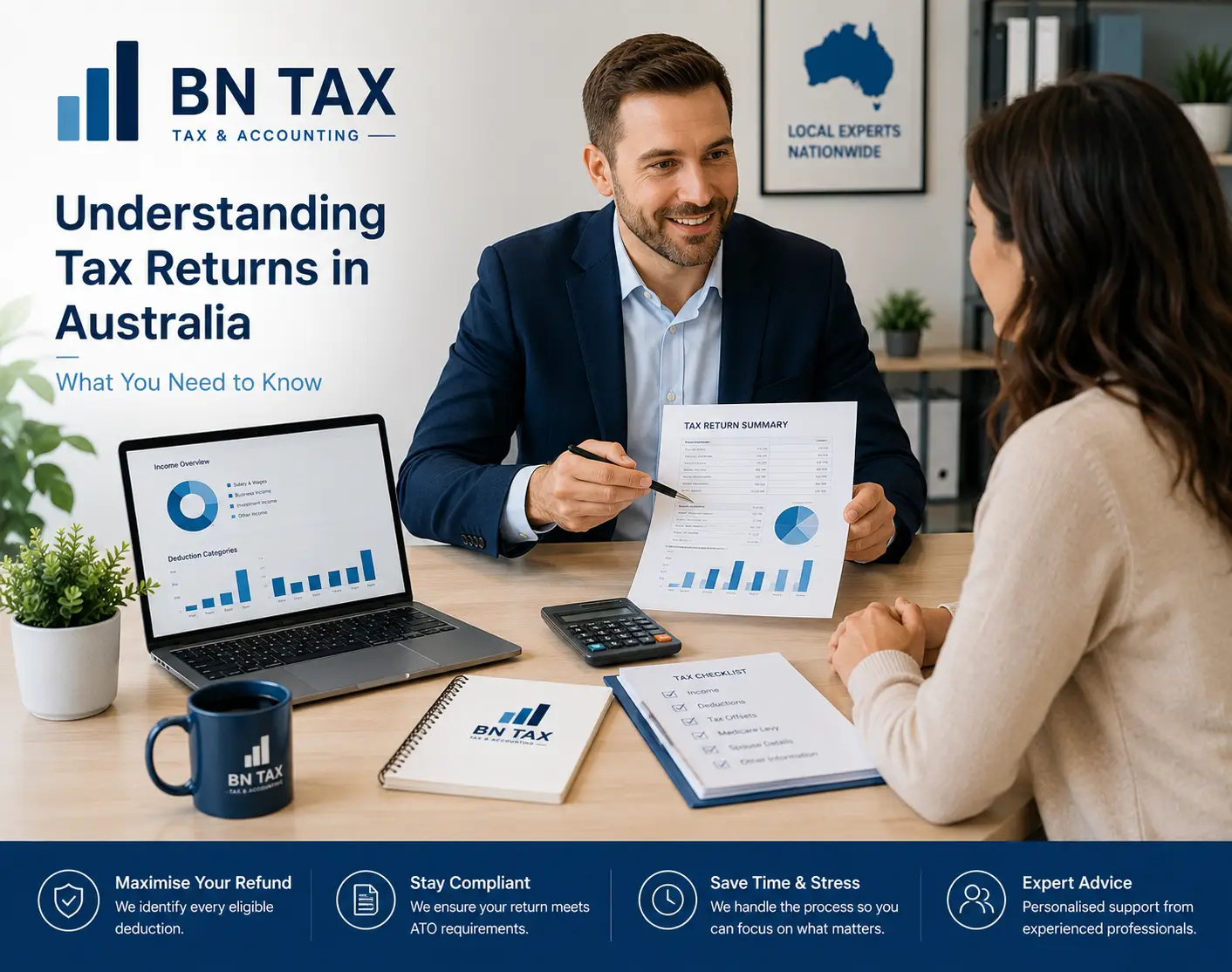
Understanding Tax Returns in Australia: What You Need to Know
For many Australians, tax time can feel overwhelming. Whether you’re an employee, sole trader, investor, or business owner, understanding your obligations for Australian tax returns is essential to staying compliant and maximising your financial outcomes.
In short, this guide explains the basics of Australian tax returns, common deductions, important deadlines, and how professional tax advice can help you get the best result.
What Are Australian Tax Returns?
A tax return is a document lodged with the Australian Taxation Office (ATO) that reports your income, deductions, and other financial information for a financial year. In turn, the ATO uses this information to determine whether you have paid the correct amount of tax.
For example, if you’ve paid too much tax throughout the year, you may receive a refund. If you’ve paid too little, you may have an amount owing.
Who Needs to Lodge Australian Tax Returns?
In general, most Australians who earn income are required to lodge a tax return. This includes:
- Employees receiving wages or a salary
- Sole traders and self-employed individuals
- Company directors
- Investors earning rental or investment income
- Contractors and freelancers
- Individuals receiving certain government payments
Even if you earn a small amount of income, it’s important to check whether you need to lodge.
Common Tax Deductions
Claiming eligible deductions can reduce your taxable income and potentially increase your tax refund. Common deductions include:
Work-Related Expenses
Expenses directly related to earning your income, such as uniforms, tools, professional memberships, and training.
Vehicle and Travel Expenses
For eligible work-related travel, you may be able to claim vehicle expenses and travel costs.
Home Office Expenses
Many Australians now work from home and may be eligible to claim home office expenses on Australian tax returns, including internet, electricity, and office equipment.
Self-Education Expenses
Courses and training that directly relate to your current employment may be deductible.
Charitable Donations
Donations made to registered deductible gift recipients may also be claimed.
It’s important to keep accurate records and receipts to support any claims.
Australian Tax Returns: Important Deadlines
First, the Australian financial year runs from 1 July to 30 June.
Individuals lodging their own tax return generally need to submit it by 31 October. However, if you use a registered tax agent, you may be eligible for extended lodgement deadlines.
Overall, planning ahead can help avoid unnecessary stress and potential penalties.
Common Australian Tax Returns Mistakes to Avoid
Unfortunately, many taxpayers unintentionally make mistakes on Australian tax returns that can delay processing or trigger ATO reviews. Common errors include:
- Forgetting income from multiple employers
- Claiming expenses without supporting evidence
- Overclaiming work-related deductions
- Failing to include investment income
- Missing important lodgement deadlines
Therefore, taking the time to prepare your Australian tax return properly can help avoid these issues.
Why Use a Registered Tax Agent?
In addition, working with a registered tax agent provides peace of mind that your Australian tax return is accurate, compliant, and prepared in line with current tax legislation.
At BN Tax, we also help individuals and businesses navigate the complexities of Australian taxation while identifying legitimate opportunities to maximise deductions and improve outcomes.
Need Help With Your Tax Return?
Also, you can read more about lodging your tax return on the ATO website.
Whether you’re lodging your first tax return or managing more complex financial affairs, BN Tax is here to help. Our experienced team provides professional taxation services tailored to your individual circumstances.
Contact BN Tax today to discuss your tax return and ensure you’re making the most of every available opportunity.
1300 790 113
[email protected]